


 French
  English
  German
  Spanish
  Italian
In the ever-changing world of packaging, the cartonboard and carton industry plays a pivotal role in shaping the way products are presented and perceived. It is a dynamic field where innovation meets sustainability, and talented individuals are making a significant impact. To kick off our 2026 on a fresh note, we are celebrating the talents who shape innovation and sustainability in packaging, colleagues who live sustainability and who make this workspace fun and ambitious.
From plant-level controlling to group-wide planning, Tobias Bierbaumer has built his career around understanding how things work, and how to make them run better. Today, he plays a key role in coordinating MM Board & Paper’s supply chain across multiple markets.
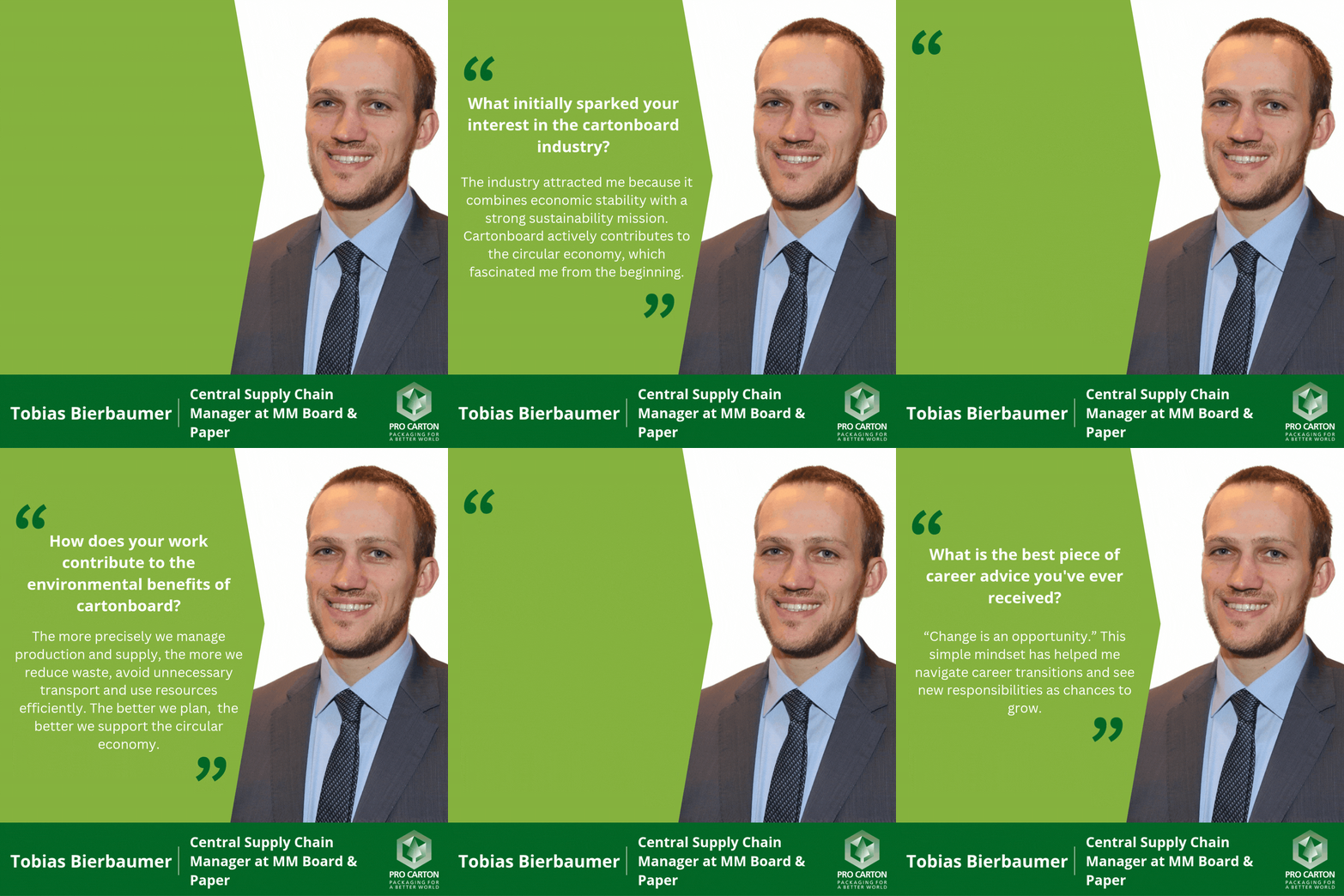
Pleins feux sur : Tobias Bierbaumer, Central Supply Chain Manager at MM Board & Paper (Vienna)
Série sur les talents de l'industrie :
- Spotlight On: Natalia Ciosk, Sales Director – Poland, Czech, Slovakia and Baltics at FOLBB
- Spotlight On : Simon Weisskopf, Country Manager pour la Suisse et l'Autriche chez Sappi
- Pleins feux sur : Ragna Orbe, assistante de laboratoire à l'usine de papier Holmen, Hallstavik, Suède
- Spotlight On : Tessa Hultholm, Product Manager à l'usine Simpele de Metsä Board
- Gros plan sur Sigrid Gerold, responsable de la sécurité et de la qualité des produits au sein du groupe MM
- Pleins feux sur Dino Vettorel, responsable de l'environnement et de la prévention des pertes chez RDM Group
- Pleins feux sur Eugenio Ciucani, ingénieur en énergie chez Holmen Board and Paper
- Pleins feux sur l'industrie : Hans-Peter Kollmannsberger, directeur des ventes, Metsä Board
- Pleins feux sur l'industrie : Kobe Goorts, directeur de la technologie et du développement, Sappi Maastricht Mill
- Pleins feux sur l'industrie : Michelle Brosch, opératrice de machine et formatrice chez Schwarzach Packaging
- Pleins feux sur l'industrie : Marcus Spanier, Services techniques à la clientèle et Services techniques aux produits chez MM Board & Paper
- Pleins feux sur l'industrie : Till Kröter, chef de projet, Groupe WEIG
- Pleins feux sur l'industrie : Aleksandra Lipińska, directrice des ventes chez FOLBB
- Pleins feux sur les talents de l'industrie : Sven Stenz, responsable de la qualité au sein du groupe WEIG
- Pleins feux sur les talents de l'industrie : Christer Nordman Vice-président des ventes et du marketing chez Pankaboard
- Pleins feux sur les talents de l'industrie : Iwona Zuk-Larsen Process Manager, Customer Service at Metsä Board
- Pleins feux sur les talents de l'industrie : Antonio Ristevski : opérateur d'extrusion chez Graphic Packaging International, Lund, Suède
- Pleins feux sur les talents de l'industrie : Pieter Verdam : Responsable du service après-vente chez FOLBB, usine d'Eerbeek
- Pleins feux sur les talents de l'industrie : Manca Rozman : chef d'équipe du service à la clientèle du sud-est de MM Board & Paper
- Pleins feux sur les talents de l'industrie : Entretien avec Albert Miralles - Chef de projet technique chez RDM Group
- Pleins feux sur les talents de l'industrie : entretien avec Helena Moring-Vepsalainen, responsable de la sécurité des produits chez Metsä.
- Pleins feux sur les talents de l'industrie : Entretien avec Thomas Braun, responsable de la conception assistée par ordinateur chez VG Nicolaus
- Pleins feux sur les talents de l'industrie : Leonie Vetter, pionnière de l'emballage durable en carton chez Faller Packaging
- Pleins feux sur les talents de l'industrie : Elisabeth Salajka - Une carrière dans l'industrie du carton et de la boîte pliante
- Pleins feux sur les talents de l'industrie : Gunilla Nykopp - Une carrière dans l'industrie du carton et de la boîte pliante
- Pleins feux sur les talents de l'industrie : Entretien avec Thomas Braun, responsable de la conception assistée par ordinateur chez VG Nicolaus
- Pleins feux sur les talents de l'industrie : Leonie Vetter, pionnière de l'emballage durable en carton chez Faller Packaging
- Pleins feux sur les talents de l'industrie : Elisabeth Salajka - Une carrière dans l'industrie du carton et de la boîte pliante
- Pleins feux sur les talents de l'industrie : Gunilla Nykopp - Une carrière dans l'industrie du carton et de la boîte pliante